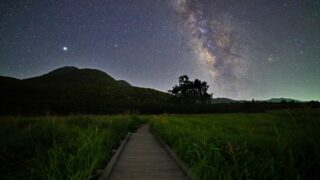
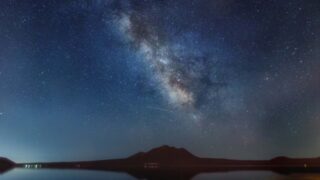
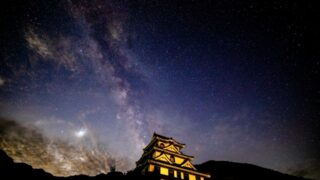
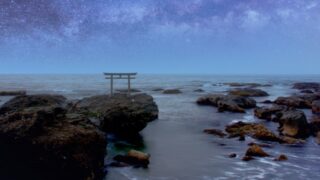
Have you ever seen a night sky where “stars seem to fall from above”?
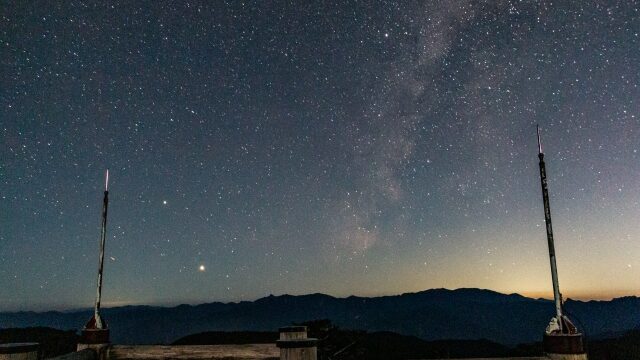
In the pitch-black darkness never experienced in cities, the Milky Way divides the sky in two, and shooting stars race across the night sky one after another—such experiences become reality in Hokkaido and Tohoku.
And 2026 is considered a “jackpot year” for meteor observation. Both the Perseid meteor shower in August and the Geminid meteor shower in December can be observed under excellent conditions with almost no moonlight interference.
In this article, we’ll introduce carefully selected stargazing spots in Northern Japan and seasonal observation plans for camping car owners.
🔭 2026: Why It’s a “Jackpot Year” for Stargazing
The most important factor for meteor shower observation is “the presence or absence of moonlight”. On a full moon night, it’s too bright to see faint meteors.
In 2026, two of the three major meteor showers can be observed under excellent conditions.
Three Major Meteor Showers – Observation Conditions Calendar
In 2026, two meteor showers can be observed under excellent conditions!
🔭 2026 Observation Strategy
Aug 12-13 Perseids coincide with new moon—perfect timing. Shiretoko Pass and other low-light pollution areas recommended.
Dec 14 Geminids is the biggest chance of the year. Observe while warming up at hot spring locations.
💡 Key Points for Camping Car Travelers
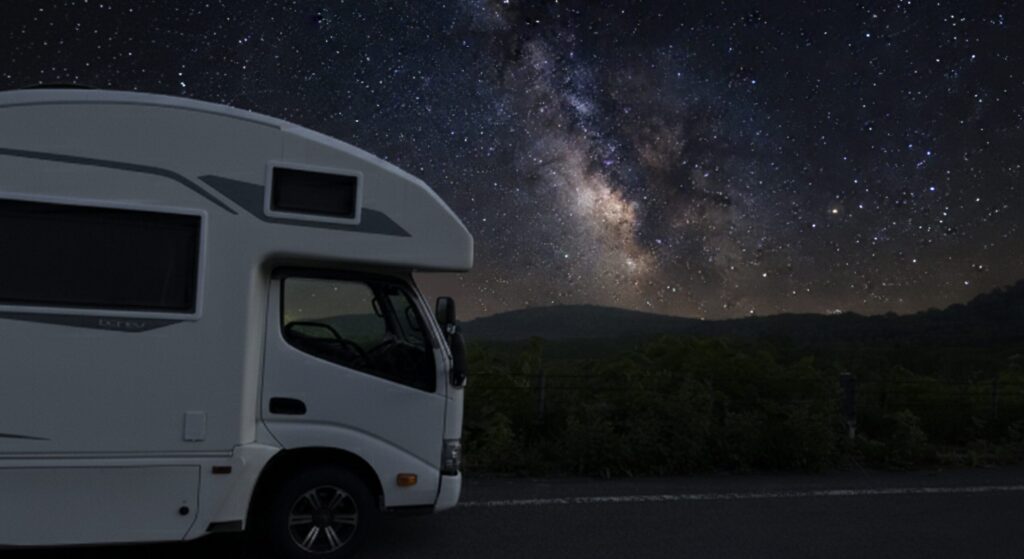
The Geminids peak is around 11 PM on December 14th. Since it’s late-night observation, with a camping car you can rest in the warm interior and go outside multiple times for viewing. This is a privilege that regular tourists can’t replicate!
Other Notable Events in 2026
- March 3: Total Lunar Eclipse: Around 8 PM for about an hour, witness the reddish-copper colored moon. The only lunar eclipse visible from Japan in 2026.
- March 8: Venus and Saturn Conjunction: Beautiful sight of two planets aligned in the western evening sky.
- October 6: Jupiter Occultation: Rare phenomenon where the moon hides Jupiter. Perfect with a telescope.
🦌 Hokkaido Area: Quest for the Ultimate Dark Sky
Hokkaido boasts some of Japan’s darkest night skies. Vast national parks and wilderness with virtually no artificial light—it’s truly a holy land for camping car travelers.
📍 Shiretoko Pass Observatory (Rausu) [Summer Only・Top Rated]
Light Pollution Level: ★★★★★ (Extremely Low)
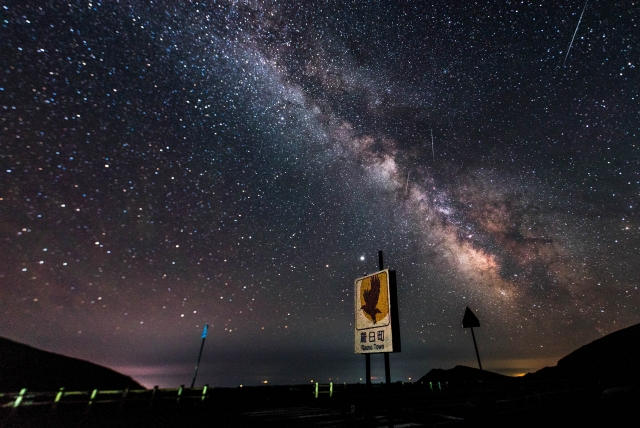
Located at 738m elevation on the World Natural Heritage Shiretoko Peninsula. With no artificial light around, “a starry sky as if stars are falling” unfolds before you.
The dense parts of the Milky Way are clearly visible, and countless shooting stars can be seen. Many describe it as “the best starry sky I’ve ever seen”—Hokkaido’s premier stargazing spot.
🚐 Camping Car Information
- Parking: Available (free, large vehicles OK)
- Restrooms: Available
- Best Season: May-October
- Note: Road closed from late October to April
🎯 Recommended Observation Plan
Visit for the August 12 Perseids. Combine with Shiretoko Five Lakes and Rausu sightseeing—nature walks during the day, stargazing at night for a luxurious itinerary.
📍 Lake Shikotsu (Chitose) [Year-Round OK・Top Winter Candidate]
Light Pollution Level: ★★★★☆ (Low)
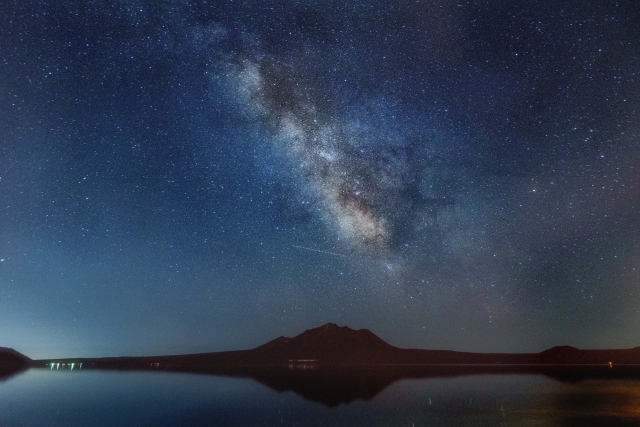
Despite being near Sapporo, the lakeside surrounded by mountains has little light pollution, and the crystal-clear lake surface reflects the starry sky creating a mystical “sea of stars” scene.
Excellent access—about 45 minutes from New Chitose Airport, about 1 hour from Sapporo. Roads remain open in winter, making it the perfect choice for December Geminid meteor shower observation.
🚐 Camping Car Information
- RV parks and auto campgrounds nearby
- Abundant day-use hot spring facilities
- Studded tires required in winter
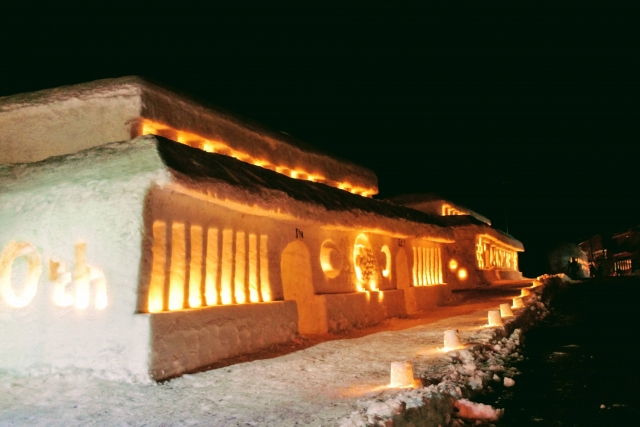
- Can combine with Lake Shikotsu Ice Festival (Jan-Feb)
🎯 Recommended Observation Plan
For December 14 Geminids, warm up at Lake Shikotsu Onsen, then observe from the lakeside parking lot. When cold, retreat to your camping car to rest—repeat this style.
📍 Jozankei Dam (Sapporo) [Hot Springs & Stargazing Combo Plan]
Light Pollution Level: ★★★☆☆ (Somewhat Low)
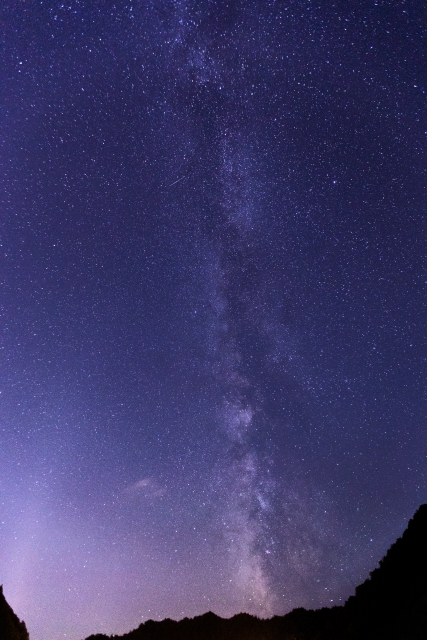
About 1 hour from central Sapporo. Despite being near the popular Jozankei Onsen, the dam area is surprisingly dark with many stars visible.
Perfect for those who think “I want to enjoy stargazing but can’t skip hot springs”. Autumn foliage and valley walks during the day, hot springs in the evening, stargazing at night—an itinerary packed with Hokkaido’s charms.
🚐 Camping Car Information
- Many parking lots in Jozankei Onsen town
- Abundant day-use bathing facilities
- Can combine with Sapporo Observatory viewing sessions
Other Recommended Hokkaido Spots
🏔️ Lake Shikaribetsu (Shikao)
A mystical lake in Daisetsuzan National Park. On windless nights, the starry sky reflects on the lake surface, creating a feeling of floating in space. Summer access only.

🌿 Shinsen-numa (Kyowa)
High-altitude wetland at 765m elevation. Surrounding mountains block light pollution, and the stars reflected on the water surface create a “natural planetarium.” Easy to combine with Niseko sightseeing.
♨️ Tohoku Area: Luxury Camping with Hot Springs & Starry Skies
The appeal of the Tohoku region is great accessibility and abundant hot springs. While not quite as dark as Hokkaido’s ultimate darkness, wonderful stargazing spots are scattered along the Ou Mountains.
Furthermore, many observatories and hot spring inns remain open in winter, so “for those who dislike cold but want to see winter’s starry sky,” Tohoku is recommended.
📍 Gassan Shizu Onsen Area (Nishikawa, Yamagata) [Winter Top Choice!]
Light Pollution Level: ★★★★☆ (Low)
Historic hot spring town at the foot of Mt. Gassan. At about 600m elevation with clear air and few streetlights, it’s a rare spot where you can enjoy a full starry sky while staying in a hot spring town.
Winter observation battles cold, but here the perfect loop of “warm up in hot springs → stargazing → hot springs again” is possible. Definitely add this to your candidates for December 2026 Geminids.
🚐 Camping Car Information
- Check inn parking (some don’t allow large vehicles)
- Michi-no-Eki Nishikawa popular for car camping
- Heavy snow in winter; 4WD + studded tires recommended
- About 1 hour from Yamagata City
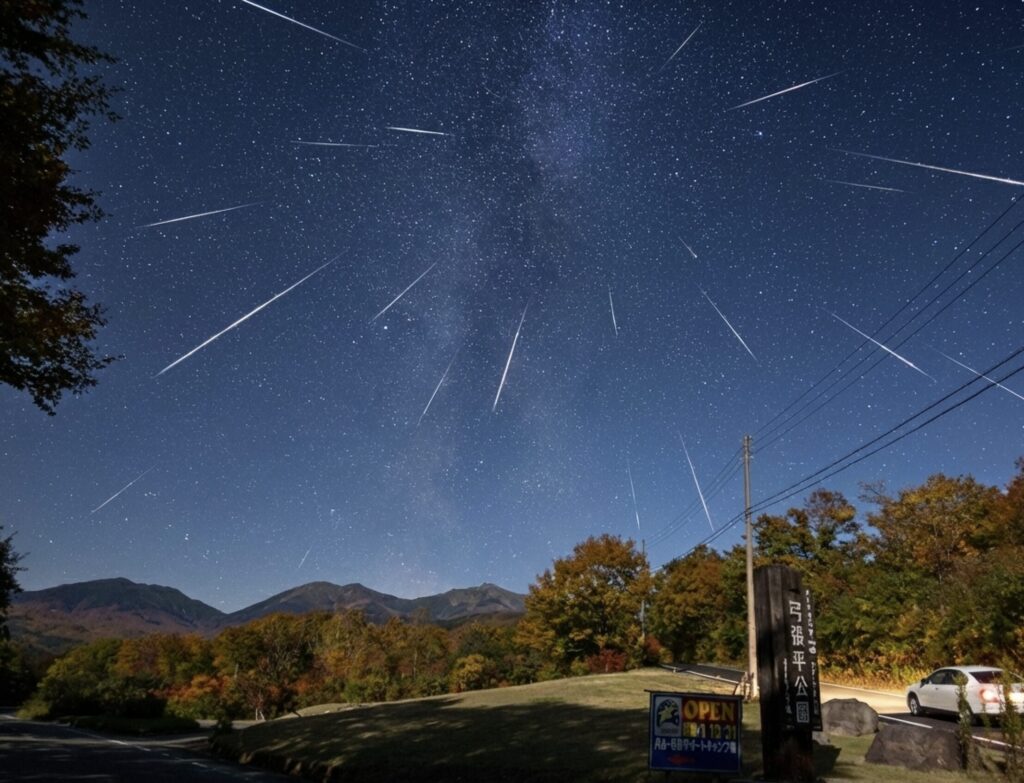
📍 Yumihiradaira Park (Nishikawa, Yamagata) [Perfect for Summer Meteor Showers]
Light Pollution Level: ★★★★☆ (Low)
Vast natural park at about 600m elevation. Endless lawns spread out, making it ideal for lying down and viewing the entire sky.
For meteor shower observation, you normally need to worry about which direction to look, but here with 360-degree openness, shooting stars simply fly into your view just by looking up.
🚐 Camping Car Information
- Large parking lot available
- About 1 hour from Yamagata City
- Summer campground available
- Easy to combine with Gassan Shizu Onsen
🎯 Recommended Observation Plan
For August 12 Perseids, enjoy Mt. Gassan trekking during the day, Shizu Onsen in the evening, then lie down at Yumihiradaira for meteor watching at night—a luxurious course.
🔭 For Expert Support: Public Observatories in Hokkaido & Tohoku
To observe comets or deep-sky objects (galaxies, clusters), public observatories with large telescopes are recommended. Enjoy viewing celestial objects invisible to the naked eye while listening to expert staff explanations.
Galaxy Forest Observatory (Rikubetsu, Hokkaido)
Galaxy Forest Observatory features Japan’s largest public telescope (115cm reflector “Rikuri”). In “Japan’s coldest town,” zero light pollution environment where 6th magnitude stars are visible to the naked eye. Temperatures can drop to -30°C in winter—bring adequate cold weather gear.
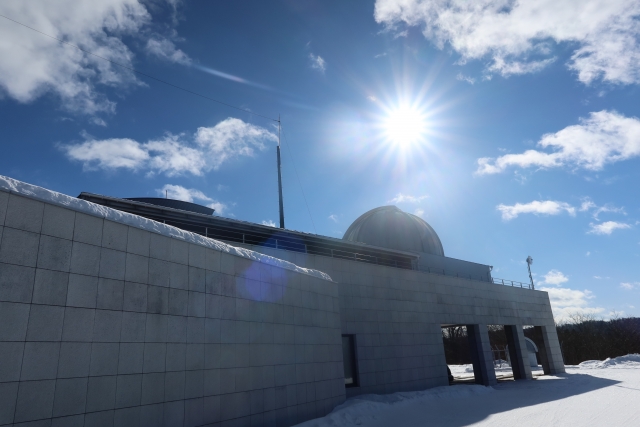
Oshu Space Museum (Iwate)
Oshu Space Museum holds monthly star observation sessions on the 2nd Saturday (7:00-8:30 PM). Open in winter, ideal for observing low-temperature comets.
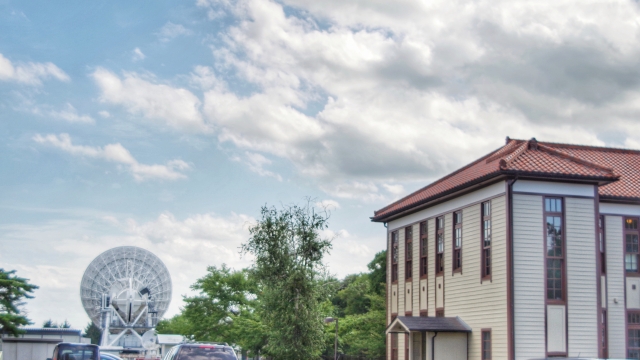
Kakudaira Observatory (Fukushima)
Kakudaira Observatory is located in Samegawa Village’s tourist ranch. Public events available. Surrounding area has low light pollution; naked-eye observation outside facilities also excellent.
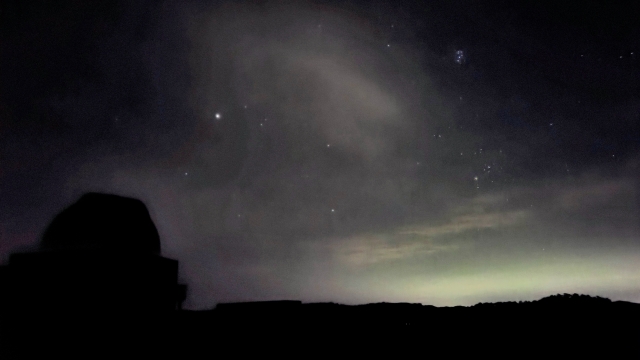
Ichinohe Observatory (Iwate)
Facility with planetarium (50 seats). Can also serve as backup plan for bad weather.
Other Recommended Tohoku Spots
🌸 Oguni-numa (Kitashiobara, Fukushima)
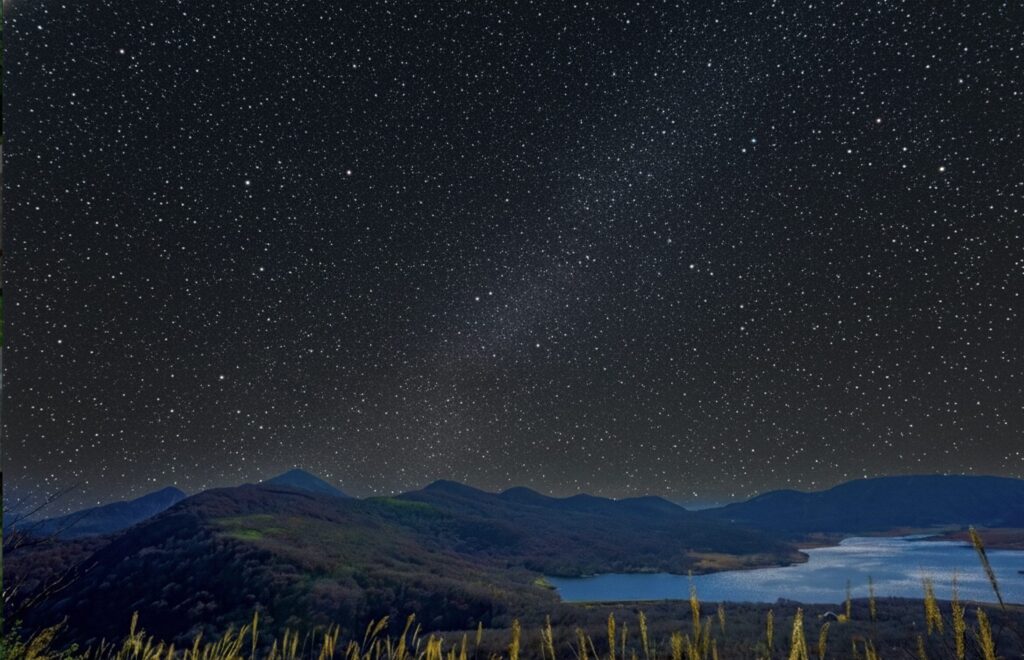
In Bandai-Asahi National Park at about 1,000m elevation, a quiet highland. Mystical environment surrounded by beech forest, where autumn to winter air clarity makes stars stand out brilliantly. Access is somewhat challenging, but the “remote feeling” is outstanding.
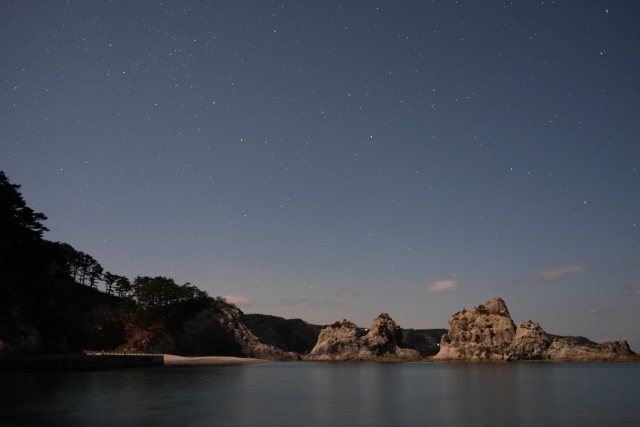
🌊 Sanriku Fukko National Park・Jodogahama Area (Iwate)
Coastal areas facing the Pacific make it easy to avoid inland city lights, allowing wide observation of the low eastern sky. Suitable for spring-autumn eastern sky celestial observation. Combine with coastal drives during the day and stargazing at night.
⚠️ How to Safely Enjoy Winter Stargazing
Hokkaido and Tohoku winters are completely different from mainland Japan. Nighttime temperatures often drop below -15°C.
With a camping car you can escape to the warm interior, but thorough preparation is still necessary during outdoor observation.
🧊 Absolute Rules for Winter Observation
【Transportation】
- Studded tires mandatory (all-season tires not acceptable)
- 4WD vehicles strongly recommended
- Always check road surface freezing information beforehand
- Avoid prolonged solo waiting in remote areas
【Cold Weather Gear】
- Arctic-grade down jacket
- Insulated boots (rubber boot type recommended)
- Two-layer gloves: inner + outer gloves
- Plenty of disposable hand warmers (for shoes and adhesive types)
- Neck warmer, knit cap
【Observation Style】
- Repeat cycle: 30 min observation → 15 min rest in vehicle
- Prepare hot drinks in thermos
- Cold feet are the biggest enemy. Standing on insulation mat also effective
🎒 What to Bring for Stargazing Camping
🔦 Observation Essentials
- Red light (white light destroys night vision)
- Star chart or smartphone app
- Binoculars (7×50 recommended)
- Picnic sheet (for lying down to observe)
- Folding chair (for extended observation)
🔋 Useful Items
- Backup battery (smartphone battery drains quickly in cold)
- Tripod + smartphone holder (for astrophotography)
- Thermos (hot drinks)
- Blanket or sleeping bag (to wrap around outdoors)
- Insect repellent (summer)
💡 Pro Tip
Night vision (dark adaptation) takes about 20-30 minutes. When you arrive at the observation site, avoid looking at your smartphone and let your eyes adjust to the darkness. This alone dramatically changes the number of stars you can see!
📅 Seasonal Recommended Plans
Hokkaido & Tohoku stargazing spots by season
Winter
December – March
Observation style warming up in hot springs works best. Studded tires mandatory!
Spring
April – May
Check Shiretoko Pass opening (usually late April) before departure. Cherry blossoms and starry skies together!
Summer
June – August
Mid-August is the year’s best season! Insect repellent essential. Relatively comfortable temperatures at night.
Autumn
September – November
Clear air makes stars beautiful. Shiretoko Pass closes late October—visit early!
🔭 2025-2026 Astronomical Events Calendar
Timeline of major upcoming astronomical phenomena.
Especially the 2026 Perseid meteor shower has minimal moonlight interference—an excellent observation opportunity.
Geminids
December 14, 2025
Representative winter meteor shower. Observable all night with high rates. Tohoku winters are harsh but sky transparency is supreme. Expect 150 meteors per hour.
Quadrantids
January 4, 2026
Meteor shower opening the new year. Peak duration is short, so advance timing check essential. 2026 coincides with full moon—difficult conditions.
Total Lunar Eclipse
March 3, 2026
Around 8 PM for about an hour, observe the reddish-copper moon. The only lunar eclipse visible from Japan in 2026. Easy observation time—don’t miss it.
Perseids
August 12-13, 2026
2026 has almost no moonlight interference—optimal observation conditions. Camping observation on Hokkaido/Tohoku highlands recommended. Enjoy with summer Milky Way.
Jupiter Occultation
October 6, 2026
Rare astronomical phenomenon where the moon hides Jupiter. With binoculars or telescope, observe Jupiter disappearing behind the moon’s edge.
Geminids
December 14, 2026
2026’s biggest observation chance! Moon age 6 with minimal moonlight, peak around 11 PM—perfect conditions. Lake Shikotsu or Gassan Shizu Onsen recommended.
🌌 Sky “Darkness” Rankings
Comparison based on Bortle Scale (light pollution level).
Lower numbers indicate darker skies, better for stargazing.
🏆 Rikubetsu (Hokkaido)
Known as “Japan’s coldest town,” but its air transparency and lack of light pollution are world-class. 6th magnitude stars visible to naked eye, with aurora observation records.
🔭 Jododaira (Fukushima)
At 1,600m elevation. Often above the sea of clouds—stars visible even when cloudy below. “Sky observatory.” Regular on astronomers’ favorite spots list.
💡 What is Bortle Scale?
Light pollution index devised by astronomer John Bortle. Rates from Level 1 (complete darkness) to Level 9 (urban areas) in 9 stages.
📍 Selected Spots & Observation Targets
From Hokkaido to Fukushima, each prefecture’s best spots
and the celestial objects to target there.
HokkaidoHokkaido
Galaxy Forest Observatory (Rikubetsu)
Light pollution-free. Darkness where 6th magnitude stars are visible naked eye. Japan’s largest public telescope installed.
- Milky Way (galactic center)
- Polaris (Ursa Minor)
- Aurora (rarely observable)
IwateIwate
Koiwai Farm
Famous for astrophotography with vast grounds and Mt. Iwate backdrop. Solitary tree with starry sky combination popular.
- Winter Hexagon
- Pleiades Cluster (Subaru)
MiyagiMiyagi
Zao Mountains
High elevation allows viewing starry sky from above sea of clouds. Famous photography spot for Okama crater with stars.
- Cassiopeia
- Sendai Plain night view with stars
FukushimaFukushima
Jododaira
Regular on astronomers’ “beautiful sky” lists. Sky observatory at 1,600m elevation.
- Summer Triangle
- Scorpius
AkitaAkita
Lake Tazawa
Starry sky reflected on lake surface is mystical. Enjoy Japan’s deepest lake’s mysterious atmosphere with stars.
- Cygnus (Deneb)
- Andromeda Galaxy
YamagataYamagata
Mt. Gassan
Alpine plants and starry sky contrast. Observation while warming at Shizu Onsen recommended.
- Lyra (Vega)
- Aquila (Altair)
🌌 Hokkaido & Tohoku Stargazing 2026 – Frequently Asked Questions
✨ Summary: Best Observation Plans for 2026
2026 is a “jackpot year” for meteor observation. Especially these two timing windows are must-see:
【Summer Best Shot】August 12-13 Perseids
→ At Shiretoko Pass Observatory, countless meteors streaming across the pitch-black sky without moonlight
【Winter Best Shot】December 14 Geminids
→ At Lake Shikotsu or Gassan Shizu Onsen, a luxury plan enjoying both hot springs and starry skies
With a camping car, you can enjoy “resting in the warm interior, then going outside at the perfect timing to observe”—a style regular tourists can’t replicate.
In 2026, why not embark on a journey to encounter “the best starry sky of your life”?
※ Important Notes
・Always check road conditions and weather before departure
・Observatory event schedules may change. Check official websites
・Visiting remote areas in winter requires thorough preparation and experience